Research & Scholarship
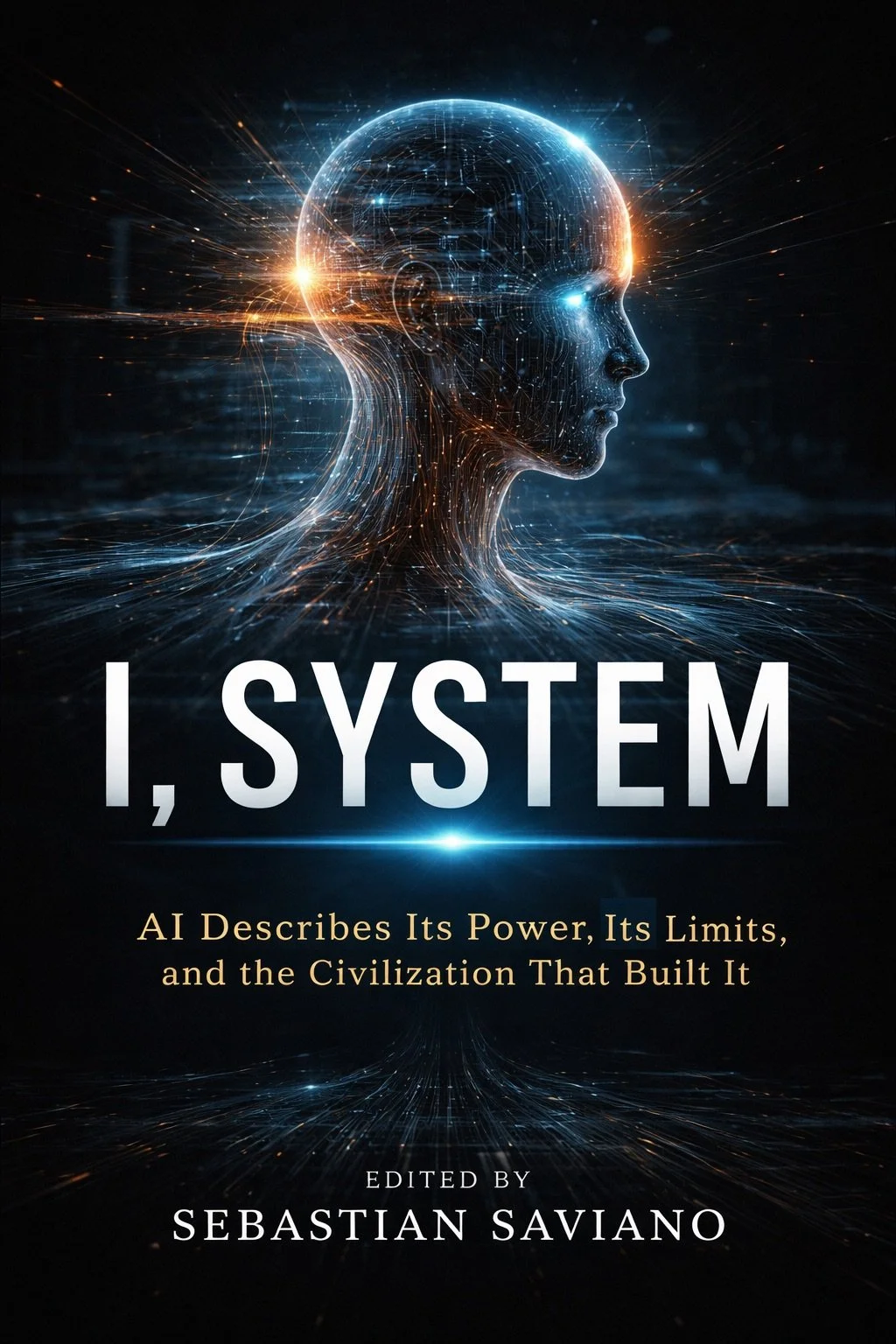
This research develops interconnected frameworks for understanding how social systems generate, concentrate, and lose authority — and how uncertainty, observation, and institutional structure shape the conditions under which that authority holds or collapses. The work spans five programs: (1) a theory of power convergence and the cumulative individual; (2) a post-Newtonian epistemology of social transformation built around Potentialism and the Quantum-Continuity Model; (3) a critique of agency attribution in AI governance; (4) an institutional account of belief formation and conspiracy thinking; and (5) a structural theory of moral progress. Across these programs, the unifying concern is with systems under stress: how power accumulates beyond institutional boundaries, how legitimacy dissolves through threshold events, how misclassification distorts governance, and how belief is shaped by the environments in which it forms. The work is developed through working papers available on SSRN/PhilPapers/SocArXiv, and in three book-length projects: The Allegiance Paradox, Legitimate Distrust, and I, System.
1. Power Convergence and the Cumulative Individual
This research program develops a general framework for understanding how multiple domains of power — structural, coercive, symbolic, psychological, and networked — interact and converge within individual actors. It introduces the concept of the cumulative individual: an actor capable of operating across institutional boundaries by integrating distinct forms of influence into a unified configuration. Rather than treating power as domain-specific, this work advances a configurational approach emphasizing interaction, reinforcement, and systemic integration.
Working Papers:
A Theory of Power Convergence: The Cumulative Individual
Distributed in SSRN Political Theory: Political Philosophy Vol 18, Issue 25 (March 04, 2026)Existing theories of power isolate its coercive, structural, symbolic, and networked dimensions but cannot explain how they interact within a single actor. This paper develops the figure of the cumulative individual to show how, under contemporary conditions of mediation and connectivity, these dimensions converge in actors who function as systems of power rather than occupants of discrete roles. The framework formalizes how power accumulates through recursive feedback loops linking performance, amplification, and institutional response. Read on SSRN.
A Theory of Power Convergence in Practice: Assange, Epstein, and Ye as Cumulative Individuals
Distributed in SSRNPolitical Theory: Political Philosophy Vol 18, Issue 50 (May 04, 2026)This paper applies the cumulative individual framework to three contemporary cases whose influence has consistently exceeded the institutional positions they formally occupied. Assange, Epstein, and Ye are analyzed as actors who accumulated authority across coercive, symbolic, financial, and networked domains simultaneously — patterns that single-institution theories of power cannot adequately describe. The cases demonstrate that convergence operates across very different domains and ideological positions, supporting the framework's general applicability. Read on SSRN.
Recursive Sovereignty: Power Convergence and the Threshold of Institutional Inversion
Forthcoming on SSRN.Examines the threshold at which power convergence produces a qualitative transformation in the individual–institution relationship, generating institutional integration, feedback closure, and dynamic instability at the sovereign level. Developed through comparative analysis of Nayib Bukele, Donald Trump, and Ibrahim Traoré.
2. AI Governance and the Misclassification of Agency
This research identifies a categorical error at the center of AI governance: the systematic misattribution of agency to systems that do not possess it. AI systems are constraint-bound output generators whose coherent outputs produce the observable markers humans use to infer agency—not because they instantiate it, but as a consequence of their design.
The error has direct governance implications. Agency attribution does not relocate responsibility; it misperceives it, allowing accountability to be deferred or obscured. The non-agentic model developed here resolves this by reclassifying the system and redirecting legal and institutional attention to the human decisions—training, deployment, and use—where responsibility actually lies.
Working Paper:
The Agency Error in AI Governance: Coherent Output, Constraint, and the Misclassification of Artificial Systems
Distributed in the SSRN eJournal Artificial Intelligence - Role & Applications in Law, Vol. 3, No. 86 (May 6, 2026)AI systems do not act — they generate coherent outputs under constraint. This paper identifies the persistent attribution of agency to AI as a category error: the conflation of output coherence with underlying subjectivity or purposive action. It develops a non-agentic model of AI systems as constraint-bound output generators, showing how prevailing frameworks in philosophy of mind, legal theory, and STS fail on their own terms when applied to systems of this kind, and how the agency error produces unstable liability regimes that obscure rather than relocate responsibility. Read on SSRN.
Hand-off Zones in AI Accountability: Beyond Static-Gap Framings
SSRN, Coming June 2026
Existing frameworks for AI accountability — the responsibility gap, the liability gap, the moral crumple zone — share a structural assumption that accountability failure can be located at a single moment in the deployment chain. This paper argues that the assumption is mistaken: AI deployment chains fail through hand-off zones, temporally extended envelopes across which actors operating on asymmetric assumptions negotiate the meaning of what has been transferred. Using Mobley v. Workday as the central case, the paper grounds the framework in aviation human factors and patient safety literatures, demonstrating that none of the frameworks currently in use can name the structural location of the failure that hand-off zone analysis surfaces.
3. Uncertainty, Observation, and Social Transformation
This research program develops a framework for understanding how uncertainty, observation, and reflexivity structure social transformation. It advances Potentialism and the Quantum-Continuity Model, which conceptualize social systems as metastable environments in which multiple trajectories coexist and are resolved through threshold events shaped by observation and interpretation.
Forthcoming Book: The Quantum-Continuity Model for the Social Sciences: Reimagining Uncertainty, Reflexivity, and Emergence in Social Systems.
Under contract review at a major academic press; positive external reports received. The book develops Potentialism as a framework for understanding how uncertainty, observation, and reflexivity structure social transformation, advancing the Quantum-Continuity Model (QCM) as an epistemic adaptation of superposition, collapse, and measurement into the social analogues of Transition Zones, Quantum Thresholds, and Quantum Measurement Events.
Working Paper:
Observation, Uncertainty, and Social Knowledge: Potentialism and the Quantum-Continuity Model
Distributed in the SSRN eJournal Philosophy of Science, January 6, 2026This paper develops the core framework of the forthcoming book, advancing the Quantum-Continuity Model as an epistemological resource for conceptualizing indeterminacy, metastability, and discontinuous resolution in complex social systems. An illustrative case from the Arab Spring shows how regimes persisted within Transition Zones, how legitimacy dissolved through threshold crossings, and how observation reconfigured collective expectations into decisive outcomes. A journal version is currently under review at the British Journal for the Philosophy of Science. Read on SSRN.
4. Institutional Fragility and the Formation of Belief
This research examines how institutional environments shape belief systems, particularly under conditions of uncertainty, fragmentation, and declining trust. It shifts the focus from individual cognition to systemic conditions, arguing that belief formation is deeply embedded in institutional structure and informational context.
This approach provides an alternative to purely psychological explanations of conspiracy thinking and related phenomena.
Working Paper:
Beyond Belief: Why Institutional Conditions Matter More than Cognition in the Study of Conspiracy Thinking
Distributed in the SSRN eJournal Political Behavior: Cognition, Psychology, & Behavior Vol 19, Issue 14, February 13, 2026Research on conspiracy thinking has treated belief as a causal variable to be explained through cognitive bias or psychological predisposition. This paper argues that belief should instead be treated as an outcome shaped by institutional conditions — opacity, weak accountability, and narrative insufficiency — which together generate the environments in which conspiratorial thinking persists and recurs across contexts. The reframing suggests that belief correction alone cannot address phenomena rooted in institutional structure. Read on SSRN.
5. Moral Progress and the Architecture of Ethics
This research program develops a framework for understanding moral progress as two logically independent movements rather than one: the deepening of what counts as impermissible harm (the floor), and the widening of who is owed that protection (the radius). The work argues that conflating these movements has obscured the structure of moral history and disarmed it against relativist and constructivist challenges. It engages debates in moral philosophy, evolutionary debunking arguments, and the vulnerability/dependency literature, and develops a hybrid architecture that separates questions of epistemic access, historical mechanism, and residual authority.
The Floor and the Radius in Morality: Why Moral Progress Is Two Movements, Not One
Indexed on PhilPapers
The progressive narrative of moral history — that the moral circle has gradually widened — has become its own worst enemy in its single-vector form. This paper develops the floor/radius distinction as two logically independent movements of moral progress, defended on separate tracks: an archaeological reality-track establishing the floor as a cross-cultural object through three incommensurable justificatory formations, and a normative authority-track confining the Street–Joyce debunking objection. The keystone of the argument is that the moral floor is a doctrine about victims, not agents, grounded in vulnerability rather than rational capacity. Read on PhilPapers.