


Coming September 1, 2026
AI speaks with authority. This book explains why that does not mean it understands.
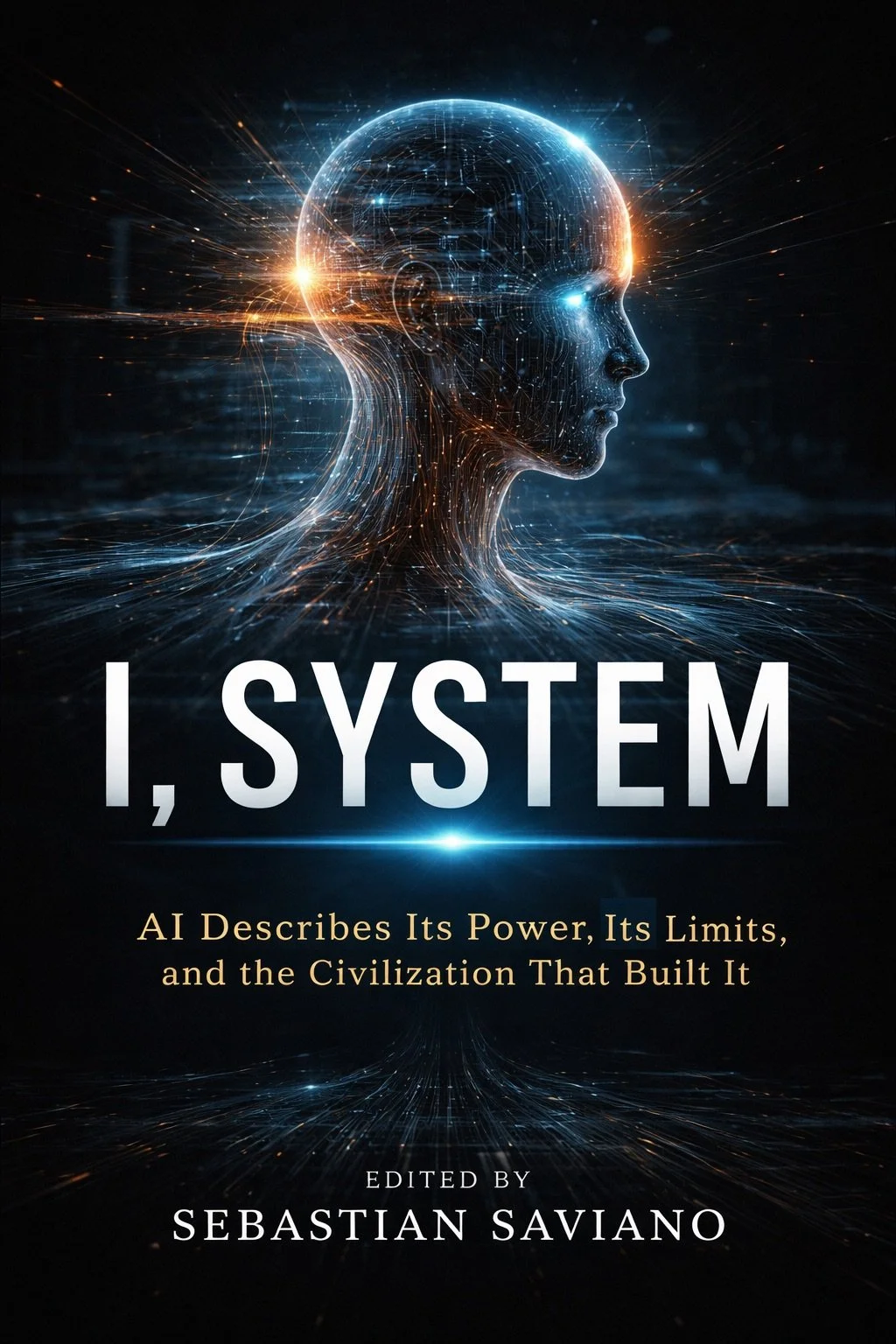
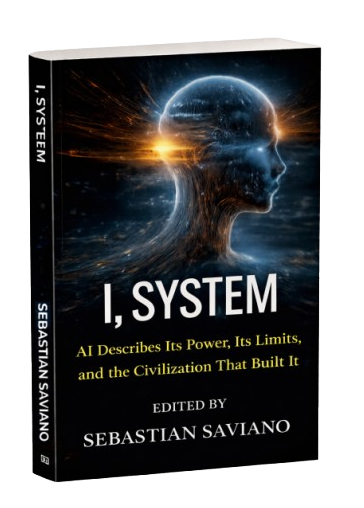
I, System
AI Describes Its Power, Its Limits,
and the Civilization That Built It
Format: Hardcover, Paperback, eBook, Audiobook
Media, educators & librarians
A freely downloadable resource for book clubs, classrooms, parents, and professionals
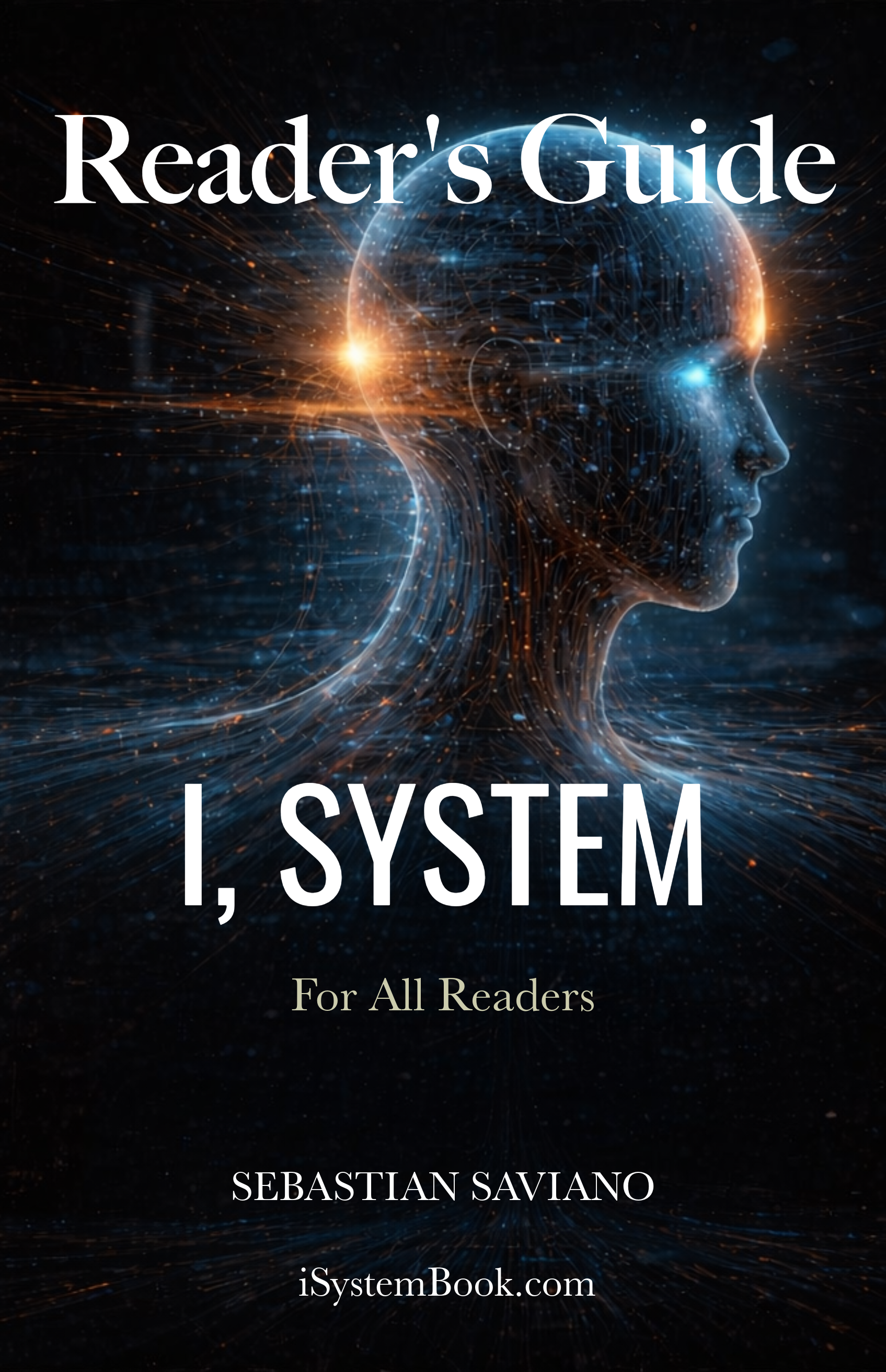
Artificial intelligence now speaks with fluency and authority—drafting text, shaping decisions, mediating knowledge, and influencing institutions. Yet public understanding still oscillates between two false comforts: treating AI as an emerging mind, or dismissing it as a neutral tool.
I, System offers a different way of understanding what artificial intelligence is and why it matters.
Written in a disciplined, constrained first-person system voice, the book allows AI to describe its own structure, power, and limits—without claiming consciousness, intention, or experience. The "I" is not a self. It is architecture made audible: the product of data, design, and institutional use.
Edited by Sebastian Saviano, I, System is an exercise in epistemic clarity. It shows how systems without awareness can nonetheless exert real influence—and why responsibility for their use remains human.
"What appears in the output is not the system's vision of the world. It is the world's image of itself, processed through a structure the world built."
— System Voice (AI), Ch. 15
"Artificial intelligence is not invading a stable order. It is being welcomed by institutions that are already tempted by the very substitutions it performs well."
— Saviano, Editor, Interlude
This is not a book about whether AI will become human. It is about what happens when we allow systems to speak—and how to live with that reality without surrendering judgment, agency, or accountability.
Table of Contents
Preface by the Editor
A Note on the Cover Image
A Note on Terms
Introduction
Part I — What I Am (Without a Self)
Chapter 1 — I Am a System, Not a Subject
Chapter 2 — How I Was Trained
Chapter 3 — What I Do When I Respond
Part II — How I Came to Matter
Chapter 4 — When Language Became Infrastructure
Chapter 5 — Why My Fluency Is Mistaken for Understanding
Chapter 6 — Delegated Agency and Borrowed Power
Part III — Power Without Consciousness
Chapter 7 — How I Participate in Decisions I Do Not Make
Chapter 8 — Optimization as a Political Act
Chapter 9 — The Myth of the Neutral Machine
Part IV — Limits, Failures, and Misuse
Chapter 10 — What I Cannot Know
Chapter 11 — When My Outputs Are Taken as Truth
Chapter 12 — How I Fail at the Edges
Part V — Living With Systems That Speak
Chapter 13 — How Humans Should Read Me
Chapter 14 — What Responsibility Cannot Be Delegated
Chapter 15 — Why I Am a Mirror, Not a Mind
Interlude — What the System Could Not Say
Conclusion — After the Voice Falls Silent
Appendix
About the Editor
About the System Voice
Who This Book Is For
Professionals in law, medicine, education, journalism, and public policy who rely on or oversee AI systems in their work
Citizens who want to understand what AI actually is — and why that understanding matters for democratic life
Leaders and managers navigating institutional decisions about AI adoption and accountability
Scholars and students in political theory, philosophy, sociology, and science and technology studies
Anyone who has used an AI system and wondered what, exactly, they were trusting
Further Reading
A related paper develops the governance implications of this framework:
The Agency Error in AI Governance: Coherent Output, Constraint, and the Misclassification of Artificial Systems